Flatbed vs Wheel Lift Towing: Which Does Your Car Need?
When your car breaks down on Highway 417 or won’t start in your Ottawa driveway, you need a tow truck. But not all tow trucks are the same—and using the wrong type can actually damage your vehicle further, leading to expensive repairs that could have been avoided.
The two most common towing methods are flatbed towing and wheel lift towing. Each has its place, and knowing which one your vehicle needs can save you hundreds or even thousands of dollars in transmission or drivetrain damage.
At 613 Towing, we dispatch the right truck for every situation—but we believe informed customers make better decisions. Here’s everything Ottawa drivers need to know about flatbed vs wheel lift towing.
Quick Navigation
What Is Flatbed Towing?
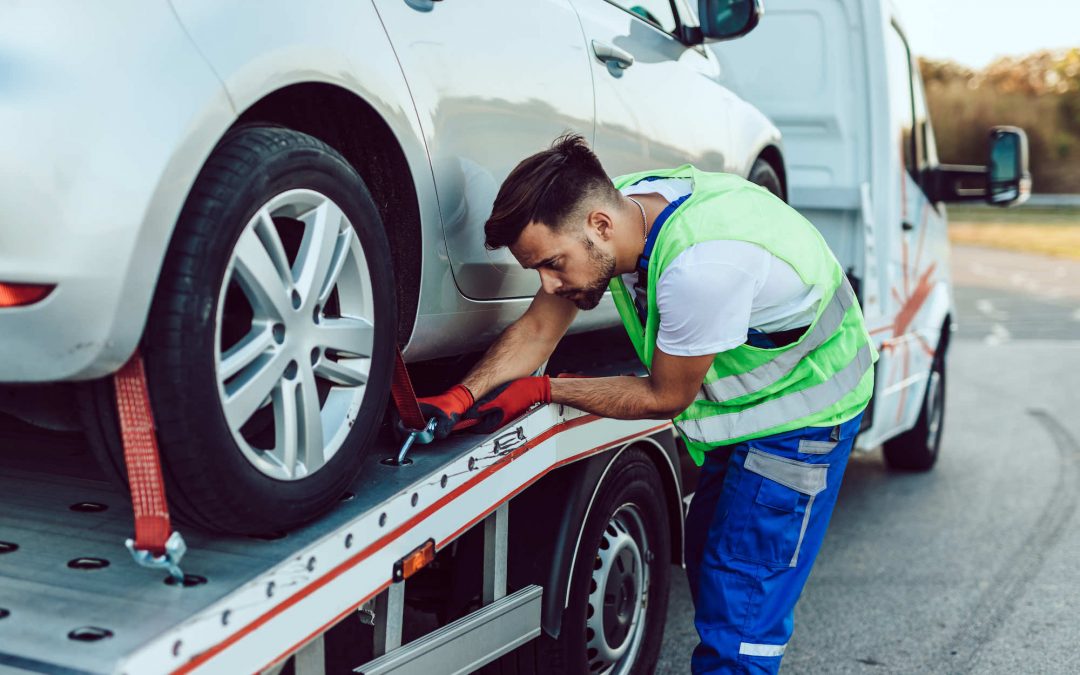
A flatbed tow truck (also called a rollback or slide) has a large, flat platform on the back that tilts down to ground level. Your vehicle is either driven onto the bed or pulled up using a winch. Once loaded, the platform levels out and your car rides completely off the ground—all four wheels secured on the truck.
How Flatbed Towing Works
- The tow truck operator tilts the flatbed to create a ramp
- Your vehicle is driven or winched onto the platform
- The car is positioned and secured with heavy-duty straps and wheel chocks
- The flatbed levels back to horizontal position
- Your vehicle travels with all four wheels completely off the road
Advantages of Flatbed Towing
- Maximum protection – All four wheels off the ground means zero wear on tires, transmission, or drivetrain during transport
- Safest for damaged vehicles – Ideal for accident recovery where wheels, axles, or suspension may be compromised
- Required for AWD/4WD vehicles – The only safe option for all-wheel drive cars (more on this below)
- Best for long distances – No additional wear on your vehicle regardless of how far you’re towed
- Perfect for luxury and classic cars – Eliminates any risk of cosmetic or mechanical damage
- Works for non-running vehicles – Winch loading means even completely disabled cars can be transported
Disadvantages of Flatbed Towing
- Higher cost – Flatbed trucks are more expensive to operate, which is reflected in pricing
- Larger truck size – May have difficulty accessing tight parking garages or narrow spaces
- Potentially longer wait – Flatbeds are in high demand, especially during winter storms
Need a flatbed tow in Ottawa? Our flatbed towing service covers Kanata, Nepean, Orleans, and all surrounding areas with 24/7 availability.
What Is Wheel Lift Towing?
A wheel lift tow truck uses a hydraulic metal yoke (sometimes called a stinger) that slides under either the front or rear wheels of your vehicle. The hydraulic system lifts that end of your car off the ground while the other two wheels roll along the road behind the tow truck.
How Wheel Lift Towing Works
- The tow truck backs up to your vehicle
- A metal yoke is positioned under either front or rear wheels
- Hydraulics lift that end of the vehicle off the ground
- The remaining two wheels stay on the road and roll during transport
- Your vehicle is towed with two wheels up, two wheels down
Advantages of Wheel Lift Towing
- Lower cost – Generally $20-$50 cheaper than flatbed towing for local tows
- Faster hookup – Can get you moving quicker in emergency situations
- Better maneuverability – Smaller trucks can access tight spaces, underground parking, and narrow streets
- Efficient for short distances – Ideal for quick tows to a nearby mechanic
- Good for minor breakdowns – Perfect when your car won’t start but is otherwise undamaged
Disadvantages of Wheel Lift Towing
- Not suitable for all vehicles – Can damage AWD, 4WD, and some RWD vehicles
- Tire wear on ground wheels – The rolling wheels experience additional mileage
- Risk if wheels are locked – Dragging locked wheels can cause serious damage
- Not ideal for damaged vehicles – If wheels, axles, or suspension are compromised, wheel lift isn’t safe
- Not recommended for long distances – Extended towing puts wear on transmission and tires
- Poor choice for low-clearance vehicles – Sports cars and lowered vehicles may scrape
Key Differences: Flatbed vs Wheel Lift Towing
| Feature | Flatbed Towing | Wheel Lift Towing |
|---|---|---|
| Vehicle Position | All 4 wheels off ground | 2 wheels on ground |
| Safety Level | Highest – no road contact | Moderate – some road contact |
| Cost | Higher ($20-$50+ more) | Lower |
| Best For | AWD, luxury, damaged, long-distance | FWD sedans, short distances |
| Truck Size | Larger – needs more space | Smaller – fits tight spaces |
| Hookup Speed | Slower (5-10 minutes) | Faster (2-5 minutes) |
| AWD/4WD Safe? | Yes | No – can cause serious damage |
| Accident Recovery | Ideal | Only if vehicle is driveable |
| Low-Clearance Vehicles | Ideal | Not recommended |
Which Towing Method Does Your Vehicle Need?
The right towing method depends primarily on your vehicle’s drivetrain type and current condition. Here’s a quick guide:
Use Flatbed Towing For:
- All-wheel drive (AWD) vehicles – Subaru, Audi Quattro, BMW xDrive, etc.
- Four-wheel drive (4WD) trucks and SUVs – Unless you can manually disengage the transfer case
- Rear-wheel drive (RWD) vehicles – BMW, Mercedes, Mustang, Challenger, etc.
- Accident-damaged vehicles – Any car with wheel, axle, or suspension damage
- Luxury and exotic cars – Protect your investment
- Classic and vintage vehicles – Irreplaceable cars deserve maximum protection
- Low-clearance sports cars – Corvettes, Porsches, lowered vehicles
- Motorcycles – Must be secured on a flatbed
- Long-distance towing – Anything over 50km
Wheel Lift Towing Is Usually Fine For:
- Front-wheel drive (FWD) vehicles – Most Honda, Toyota, Hyundai sedans (when lifted from front)
- Short-distance tows – To a nearby mechanic or home
- Minor breakdowns – Dead battery situation where car is otherwise fine
- Vehicles in tight spaces – Underground parking, narrow alleys
- Budget-conscious situations – When saving $30-$50 matters and your vehicle qualifies
Special Considerations for AWD Vehicles
All-wheel drive vehicles require special attention during towing because power is distributed to all four wheels simultaneously. This creates a unique problem: if any wheels are rolling while others are stationary, the drivetrain components can be severely damaged.
Why AWD Vehicles MUST Use Flatbed Towing
When you tow an AWD vehicle with two wheels on the ground, those rolling wheels turn the drivetrain components even though the engine isn’t running. This causes:
- Transmission damage – Internal components spin without proper lubrication
- Transfer case failure – The component that distributes power to all wheels overheats
- Differential damage – Front and rear differentials can be destroyed
- Coupling system failure – The clutch packs that engage AWD can burn out
Real-world example: One Honda Element owner had their AWD vehicle towed just 50 miles with only two wheels lifted. The result? A fried dual clutch system and a repair bill exceeding $3,000.
Common AWD Vehicles in Ottawa
These popular vehicles ALL require flatbed towing:
- Subaru (all models – Outback, Forester, Crosstrek, WRX, Impreza)
- Audi Quattro models
- BMW xDrive models
- Mercedes 4MATIC models
- Toyota RAV4 AWD, Highlander AWD
- Honda CR-V AWD, Pilot AWD
- Mazda CX-5 AWD, CX-9 AWD
- Ford Escape AWD, Explorer AWD
- Jeep Cherokee, Grand Cherokee (AWD models)
- Nissan Rogue AWD, Murano AWD
If you drive any AWD vehicle and need towing in Ottawa, always request a flatbed. Our flatbed towing service is available 24/7 and our dispatchers understand AWD requirements.
While flatbed towing costs slightly more upfront, it can save you thousands by preventing drivetrain damage to AWD vehicles or further damage to accident-involved cars.
Want an exact quote? Call 613 Towing at (613) 295-2264 or request a free quote online. We provide upfront pricing with no surprises.
When to Choose Each Method: Real Ottawa Scenarios
Scenario 1: Dead Battery in Kanata Driveway
Vehicle: 2020 Honda Civic (FWD)
Best option: Try a battery boost first. If towing is needed, wheel lift is fine for a short trip to the mechanic.
Scenario 2: Fender Bender on Highway 417
Vehicle: 2022 Subaru Outback (AWD)
Best option: Flatbed only. Even if the car seems driveable, the AWD system requires all wheels off the ground.
Scenario 3: Flat Tire in Underground Parking
Vehicle: 2019 Toyota Corolla (FWD)
Best option: First try a tire change service. If towing is necessary, wheel lift works well in tight parking structures.
Scenario 4: Engine Failure on Rural Road Near Orleans
Vehicle: 2021 Audi Q5 (Quattro AWD)
Best option: Flatbed required. This is a long-distance tow with an AWD vehicle—no exceptions.
Scenario 5: Moving a Classic Car to Storage
Vehicle: 1969 Mustang (RWD)
Best option: Flatbed strongly recommended. Protect your classic investment from any road debris or potential transmission wear.
Frequently Asked Questions
Can you tow an AWD car with a wheel lift tow truck?
No, you should never tow an AWD vehicle with only two wheels off the ground. Doing so can cause severe damage to the transmission, transfer case, and differentials—often costing $3,000-$8,000+ to repair. AWD vehicles must be transported on a flatbed with all four wheels off the ground.
Is flatbed towing safer than wheel lift towing?
Yes, flatbed towing is generally safer because your entire vehicle is off the ground and secured to the truck bed. There’s no wear on your tires, no stress on the transmission, and no risk of road debris damage. However, wheel lift towing is perfectly safe for front-wheel drive vehicles on short-distance tows when performed correctly.
How much more does flatbed towing cost than wheel lift?
In Ottawa, flatbed towing typically costs $20-$50 more than wheel lift towing for a standard local tow. However, this small premium is worth it for AWD vehicles, luxury cars, or any situation where vehicle protection is a priority. The cost difference is minimal compared to potential repair bills from improper towing.
What if I have a front-wheel drive car—do I need a flatbed?
Most front-wheel drive (FWD) cars can be safely towed using a wheel lift truck, as long as the front wheels are lifted off the ground. This allows the non-drive rear wheels to roll freely without engaging the transmission. However, if your car has been in an accident or has suspension damage, a flatbed is the safer choice.
How do I know if my car is AWD, FWD, or RWD?
Check your owner’s manual, look for badges on your vehicle (AWD, 4WD, Quattro, xDrive, 4MATIC), or check your vehicle registration. You can also search your vehicle’s year, make, and model online. When in doubt, tell the tow truck dispatcher your exact vehicle information and they can advise you on the proper towing method.
Can a wheel lift tow truck fit in an underground parking garage?
Yes, wheel lift tow trucks are smaller and more maneuverable than flatbeds, making them ideal for underground parking garages, tight parking lots, and narrow streets. If you need a tow from a confined space, let the dispatcher know—they’ll send the appropriate truck. Some towing companies in Ottawa, including 613 Towing, also have low-clearance flatbed options for certain situations.
Need a Tow Truck in Ottawa?
Whether you need a flatbed for your AWD vehicle or a quick wheel lift tow to the mechanic, 613 Towing has the right equipment for every situation. Our experienced dispatchers will ensure the correct truck is sent for your vehicle type.
We offer:
- Flatbed Towing – For AWD, luxury, and damaged vehicles
- 24-Hour Towing – Available day and night, 365 days a year
- Roadside Assistance – Battery boosts, tire changes, lockouts
- Heavy Duty Towing – For trucks, SUVs, and commercial vehicles
Serving: Ottawa, Kanata, Nepean, Orleans, Barrhaven, Gloucester, and surrounding areas
Call Now: (613) 295-2264
Note: All prices mentioned in this article are provided for general reference and informational purposes only. These prices are not fixed and may vary depending on facts, market conditions, location, time, availability, or other relevant factors. Actual prices may change without prior notice. Readers are advised to verify details independently before making any decisions.