How to Choose a Reliable Towing Company in Ottawa (2026 Guide)
Your car just broke down on Highway 417 during rush hour. You’re stressed, stranded, and need help fast. The last thing you want is to call a towing company that overcharges you, damages your vehicle, or takes two hours to arrive.
Unfortunately, not all towing companies operate with integrity. While most Ottawa tow operators are honest professionals, the industry has seen its share of scams, predatory practices, and unreliable service—which is exactly why Ontario introduced strict new towing regulations in 2024.
This guide will help you identify a trustworthy towing company before you need one, so when an emergency strikes, you already have a reliable number saved in your phone.
Quick Navigation
Why Your Choice of Towing Company Matters
Choosing the wrong towing company can turn a bad day into a nightmare. Here’s what can go wrong:
- Vehicle damage – Improper towing techniques can damage your transmission, drivetrain, bumpers, or undercarriage
- Overcharging – Unscrupulous operators may quote one price and charge another, or add hidden fees
- Long wait times – Being stranded on the side of Highway 416 in winter while waiting hours for a tow is dangerous
- Vehicle “hostage” situations – Some operators have taken vehicles to their own storage lots and demanded inflated fees for release
- Insurance complications – Using an unlicensed operator can complicate your insurance claim after an accident
A reliable towing company, on the other hand, provides peace of mind. They arrive quickly, treat your vehicle with care, charge fair rates, and get you safely to your destination—whether that’s home, a mechanic, or a dealership.
Your Towing Rights in Ontario (TSSEA 2024)
In January 2024, Ontario’s Towing and Storage Safety and Enforcement Act (TSSEA) came into full effect, replacing a patchwork of municipal bylaws with province-wide consumer protections. This legislation was created after years of incidents involving fraud, inflated invoices, and intimidating behaviour by “chaser” tow operators.
As an Ottawa driver, you now have significant legal protections:
Your Rights Under TSSEA
- Right to choose – You have the right to decide who tows your vehicle and where it goes (unless police direct otherwise)
- Certification required – Every tow truck operator and driver must hold a provincial TSSEA certificate
- Visible identification – Tow trucks must clearly display the company name and certificate number
- Written consent required – Drivers must obtain your signed consent before towing (using a “Consent to Tow” form)
- Upfront pricing – You must receive the operator’s maximum rate schedule before consenting
- Itemized invoices – You must receive an itemized invoice before payment is requested
- Multiple payment methods – Operators must accept cash, cheque, credit card, and debit
- Direct route required – Your vehicle must be taken via the most direct route to your specified destination
- Free personal property access – You can retrieve personal items from a stored vehicle at no charge
- No unsolicited referrals – Tow operators can only refer you to repair shops or other services if you ask
10-Point Checklist for Choosing a Reliable Towing Company
Don’t wait until you’re stranded to find a towing company. Use this checklist to evaluate companies now, so you’re prepared when an emergency happens.
1. Verify TSSEA Certification
Every legitimate towing company in Ontario must have a provincial certificate. Look for:
- Company name and certificate number displayed on the tow truck
- Driver’s individual TSSEA certificate (required since July 2024)
- Willingness to show you the certificate upon request
If a company can’t prove certification, don’t use them—it’s illegal for them to operate without one.
2. Check Online Reviews and Ratings
Research the company’s reputation before you need them:
- Google Reviews – Look for companies with 4+ stars and at least 50-100 reviews (more reviews = more reliable data)
- Better Business Bureau – Check the BBB Ottawa directory for accreditation and complaint history
- Yelp and Facebook – Additional sources for customer feedback
Pay attention to recent reviews (within the last 6 months) rather than older ones, as service quality can change.
3. Confirm 24/7 Availability
Breakdowns and accidents don’t follow business hours. A reliable towing company should offer:
- True 24-hour service, 7 days a week, 365 days a year
- A live dispatcher (not just voicemail) during overnight hours
- Coverage during holidays and severe weather events
Our 24-hour towing service is available around the clock, including Ottawa’s harshest winter nights.
4. Ask About Response Times
When you’re stuck on the side of the road, every minute feels like an hour. Ask prospective towing companies:
- What’s your average response time in the Ottawa area?
- Do you have multiple trucks to handle busy periods?
- Can you provide GPS tracking so I know when you’ll arrive?
A reputable company should arrive within 30-45 minutes for most Ottawa locations, faster for highway emergencies.
5. Verify Insurance Coverage
A professional towing company carries insurance to protect your vehicle during transport. Ask about:
- Liability insurance – Covers damage to your vehicle during towing
- Cargo insurance – Protects the value of vehicles being transported
- Workers’ compensation – Protects you from liability if a driver is injured
Request proof of insurance before agreeing to service. Legitimate companies will provide this without hesitation.
6. Look for Transparent Pricing
A trustworthy towing company provides clear pricing upfront:
- Published rate schedule (required by TSSEA)
- Base hookup fee clearly stated
- Per-kilometre rate for distance
- Any after-hours or emergency surcharges disclosed
- No “surprise” fees added after service
Always get a total estimate before agreeing to the tow, including all fees and taxes.
7. Ensure They Have the Right Equipment
Different situations require different tow trucks:
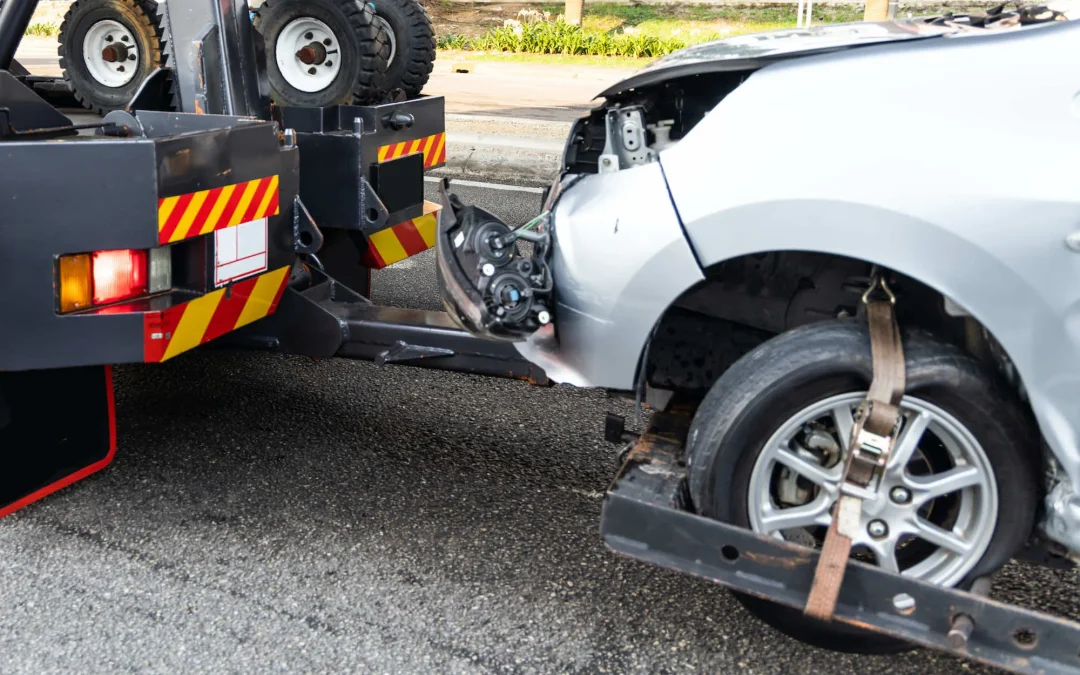
- Flatbed trucks – Essential for AWD vehicles, luxury cars, and accident-damaged vehicles
- Wheel-lift trucks – Good for front-wheel drive cars on short tows
- Heavy-duty wreckers – Required for trucks, SUVs, and commercial vehicles
- Winching equipment – Needed for vehicles stuck in ditches, snow, or off-road situations
A versatile company like 613 Towing maintains multiple truck types to handle any situation, from compact cars to heavy vehicles.
8. Check Service Coverage Area
Make sure the company serves your area and your likely destinations:
- Do they cover all Ottawa neighbourhoods? (Kanata, Nepean, Orleans, Barrhaven, Gloucester)
- Can they tow to locations outside the city if needed?
- Do they offer long-distance towing to other cities?
9. Evaluate Their Range of Services
The best towing companies offer more than just towing. Look for roadside assistance services including:
Having one company that handles all roadside emergencies simplifies your life.
10. Trust Your Instincts
Finally, pay attention to how the company treats you from the first phone call:
- Is the dispatcher friendly and professional?
- Do they answer your questions clearly without pressure?
- Are they willing to provide references or documentation?
- Does something feel “off” about the interaction?
If you feel pressured, rushed, or uncomfortable, find another company. Legitimate operators want to earn your trust.
Red Flags and Scams to Avoid
Knowing the warning signs of a dishonest towing operator can save you hundreds of dollars and a lot of frustration.
Bandit/Chaser Towing
This is the most notorious scam. “Chasers” monitor police scanners and patrol accident-prone areas, arriving at crash scenes without being called. They use pressure and intimidation to convince stranded drivers to use their services—often at inflated rates.
Warning signs:
- Tow truck arrives suspiciously fast without being called
- Driver claims your insurance company or CAA sent them (verify this independently)
- High-pressure tactics to get you to sign quickly
- Vague answers about pricing or company name
Bait-and-Switch Pricing
A company quotes a low price over the phone, then demands a much higher fee after your vehicle is on the hook.
How to protect yourself:
- Get the total price in writing (text or email) before they arrive
- Confirm there are no additional fees
- Don’t sign anything until you verify the price matches the quote
Unmarked or Poorly Marked Trucks
Legitimate towing companies have clearly branded trucks with company name, phone number, and TSSEA certificate number prominently displayed.
Red flags:
- Magnetic signs that can be easily removed
- No visible company name or phone number
- Driver refuses to show identification or certificate
- Generic truck with no branding
Cash-Only Demands
Under TSSEA, towing companies must accept multiple payment methods. Cash-only demands are a red flag for potential fraud.
Remember: You have the right to pay by credit card, debit card, cheque, or cash.
Unauthorized Destination Changes
Some dishonest operators take vehicles to their own affiliated storage lots or repair shops instead of your requested destination, then charge inflated fees for release.
Your rights:
- You choose where your vehicle goes (unless police direct otherwise)
- The operator must notify you if they take a different route
- You must receive a signed consent form before towing begins
Hidden Storage and Release Fees
Watch out for companies that charge excessive daily storage fees, “gate fees,” “labour fees,” or “release fees” to get your vehicle back.
Know your rights:
- Storage rates must be disclosed upfront
- You can retrieve personal property from stored vehicles at no charge
- Itemized invoices are required before payment
Questions to Ask Before Agreeing to a Tow
When you call a towing company—or when one arrives at your location—ask these questions before signing anything:
About Pricing
- What is your hookup fee?
- What is your per-kilometre charge?
- What is the total cost for my tow, including all fees and taxes?
- Are there any after-hours or emergency surcharges?
- What payment methods do you accept?
About the Company
- Are you TSSEA certified? Can I see your certificate?
- What insurance coverage do you carry?
- How long have you been in business?
- Can you provide references?
About the Service
- What type of tow truck will you send? (Important for AWD vehicles)
- How long until you arrive?
- Will you take my vehicle to the location I specify?
- Will I receive a copy of the consent form and invoice?
A reputable company will answer these questions clearly and without hesitation. If you get vague answers or pushback, call someone else.
What to Document During a Tow
Protect yourself by documenting the entire towing process:
Before the Tow
- Take photos of your vehicle’s condition (all four sides, any existing damage)
- Note your odometer reading
- Photograph the tow truck (including company name, phone number, license plate)
- Get the driver’s name and TSSEA certificate number
- Keep a copy of the signed consent form
After the Tow
- Inspect your vehicle for any new damage before the driver leaves
- Photograph the vehicle’s condition at the destination
- Verify your odometer reading matches the distance travelled
- Request an itemized invoice and receipt
- Note the time of pickup and drop-off
This documentation can be invaluable if you need to file an insurance claim or dispute charges.
Be Prepared: Save a Trusted Towing Contact Now
The worst time to search for a towing company is when you’re stranded, stressed, and vulnerable to scams. Take five minutes today to:
- Research reputable towing companies in Ottawa using the checklist above
- Save their contact information in your phone
- Store a business card in your glove compartment
- Share the information with family members who drive
Save 613 Towing’s Number Now
At 613 Towing, we’re proud to provide reliable, transparent, and professional towing services to Ottawa drivers. We’re fully TSSEA certified, insured, and committed to fair pricing with no surprises.
Our services include:
- 24-Hour Emergency Towing
- Flatbed Towing for AWD, luxury, and damaged vehicles
- Heavy Duty Towing for trucks and commercial vehicles
- Complete Roadside Assistance
Serving: Ottawa, Kanata, Nepean, Orleans, Barrhaven, Gloucester, and surrounding areas
Call Now: (613) 295-2264
Frequently Asked Questions
What should I do if a tow truck shows up at an accident scene without being called?
Be cautious—this is a common “chaser” scam. You have the right to choose your own towing company unless police direct otherwise. Politely decline the service, verify any claims that your insurance or roadside assistance sent them by calling directly, and use a towing company you’ve already researched. Never feel pressured to sign anything quickly.
How can I verify if a towing company is TSSEA certified in Ontario?
Every certified tow truck must display the company name and TSSEA certificate number on the vehicle. You have the legal right to ask the driver to show you their certificate (physical or digital). The Ontario Ministry of Transportation maintains a registry of certified operators, and you can check published maximum rates through their online portal.
What is a reasonable price for towing in Ottawa?
Towing costs in Ottawa typically range from $100-$400 depending on distance, vehicle type, time of day, and type of service needed. A standard local tow (within 15km) usually costs $100-$150. Always get the total price confirmed before agreeing to service, and remember that operators cannot charge more than their published maximum rates under TSSEA.
Can I choose where my vehicle is towed after an accident?
Yes, under TSSEA you have the right to choose both your towing company and your destination—unless police specifically direct otherwise for safety or investigation reasons. Don’t let a tow operator pressure you into using their affiliated storage lot or repair shop. If they take your vehicle somewhere other than your specified destination, they must notify you.
What should I do if I think I’ve been overcharged by a towing company?
First, request an itemized invoice showing all charges. Compare the charges to the maximum rate schedule the operator should have provided before towing. If they charged more than their published maximum rates, they’re required to refund the difference under TSSEA. Document everything and file a complaint through the Ontario Ministry of Transportation’s online portal if the issue isn’t resolved.
Why does it matter what type of tow truck is used for my vehicle?
Using the wrong tow truck type can damage your vehicle. All-wheel drive (AWD) and four-wheel drive (4WD) vehicles must be transported on a flatbed with all four wheels off the ground, or the transmission and drivetrain can be severely damaged. Luxury, classic, and low-clearance vehicles also benefit from flatbed towing. Front-wheel drive cars can usually be towed with a wheel-lift truck on short distances. Always specify your vehicle type when calling.
Note: All prices mentioned in this article are provided for general reference and informational purposes only. These prices are not fixed and may vary depending on facts, market conditions, location, time, availability, or other relevant factors. Actual prices may change without prior notice. Readers are advised to verify details independently before making any decisions.