⚡ Quick Answer: How to Jump Start a Car
Connect jumper cables in this order: 1) Red clamp → dead battery positive (+). 2) Red clamp → good battery positive (+). 3) Black clamp → good battery negative (−). 4) Black clamp → unpainted metal on the dead car (ground). Start the good car, wait 3–5 minutes, then start the dead car. Remove cables in reverse order.
Do not have jumper cables or a second car? Call (613) 295-2264 for a professional battery boost anywhere in Ottawa — 24/7, no membership.
A dead battery is the most common reason cars fail to start — and in Ottawa, our winters make it happen constantly. When temperatures drop below −20°C, your car battery can lose up to 50% of its cranking power. Knowing how to jump start a car safely is one of the most useful skills any Ottawa driver can have.
This guide walks you through the complete process step by step, explains common mistakes that can damage your vehicle’s electronics, and tells you exactly when it makes more sense to skip the DIY approach and call for a professional battery boost in Ottawa.
What You Need Before You Jump Start a Car
Before you attempt a battery jump start, make sure you have the following:
🔌
Jumper Cables
At least 3 metres (10 feet) long, with clearly marked red (positive) and black (negative) clamps. Keep a set in your trunk year-round.
🚗
A Second Vehicle (Booster Car)
Any car, truck, or SUV with a fully charged battery of the same voltage (12V). Do not use a hybrid or electric vehicle as a booster — their systems can be damaged.
🧧
Safety Gloves & Glasses (Optional)
Batteries contain sulfuric acid and can produce sparks. Gloves and eye protection are recommended, especially for older batteries with visible corrosion.
📖
Your Vehicle’s Owner Manual
Some newer vehicles have the battery in the trunk or under the rear seat, with remote jump terminals under the hood. Check your manual for your specific setup.
💡 No Second Car? A portable jump starter (battery pack) lets you jump start a car without another vehicle. These cost $60–$150 and are compact enough to keep in your glove box. They are especially useful in Ottawa where dead batteries happen frequently during winter. If you do not have one, call 613 Towing for a battery boost at (613) 295-2264.
Step-by-Step: How to Jump Start a Car With Jumper Cables
Follow these steps carefully and in order. The connection sequence matters — getting it wrong can cause sparks, blow fuses, or damage your vehicle’s computer:
Position Both Vehicles
Park the booster car facing the dead car so the batteries are close together. Make sure the vehicles are not touching. Turn off both engines, put both in Park (or neutral for manual), and engage the parking brakes.
Open Both Hoods & Locate the Batteries
Find the positive (+) and negative (−) terminals on each battery. They are usually marked with symbols and may have coloured caps. If terminals are covered in white or green corrosion, clean them with a wire brush or cloth before connecting.
Connect the Jumper Cables (Correct Order)
Cable 1 — Attach the RED clamp to the DEAD battery’s positive (+) terminal.
Cable 2 — Attach the other RED clamp to the GOOD battery’s positive (+) terminal.
Cable 3 — Attach the BLACK clamp to the GOOD battery’s negative (−) terminal.
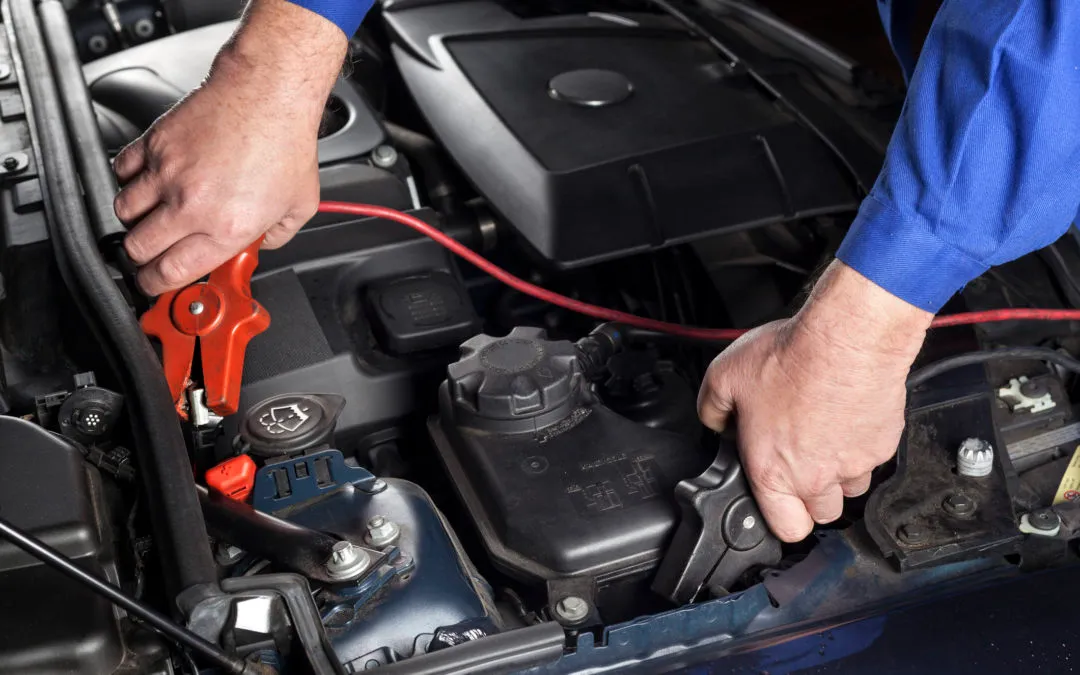
Cable 4 — Attach the other BLACK clamp to an unpainted metal surface on the dead car’s engine block (NOT the dead battery’s negative terminal). This is your ground connection and prevents sparks near the battery.
Start the Booster Vehicle
Start the car with the good battery and let it idle for 3 to 5 minutes. This allows the charge to transfer to the dead battery. Do not rev the engine — a steady idle is sufficient.
Try Starting the Dead Car
Turn the key (or push the start button) on the dead car. If it starts, great — leave both cars running. If it does not start, wait another 5 minutes and try again. If it still does not start after 2–3 attempts, the battery may be too far gone and you need professional help.
Disconnect Cables in Reverse Order
Remove the cables in the exact reverse order: black clamp from engine block → black clamp from good battery → red clamp from good battery → red clamp from dead battery. Never let the clamps touch each other while connected to a battery. Then drive the jumped car for at least 20–30 minutes to recharge the battery via the alternator.
⚠️ Important Safety Warning: Never attempt to jump start a car if the battery is cracked, leaking, or visibly swollen. The Transport Canada road safety guidelines emphasize that damaged batteries can explode when charged. If you see any physical damage, stay away from the battery and call 613 Towing at (613) 295-2264 for a safe battery boost or tow to a mechanic.
Common Jump Start Mistakes That Can Damage Your Car
A wrong move when you jump start a car can blow fuses, fry your vehicle’s ECU (engine control unit), or even cause a battery explosion. Avoid these common errors:
❌
Connecting Cables in the Wrong Order
Attaching the black clamp to the dead battery’s negative terminal (instead of a metal ground point) creates sparks right next to hydrogen gas venting from the battery. Always ground the final black clamp on bare engine metal.
❌
Letting Clamps Touch Each Other
If the red and black clamps touch while connected to a battery, you create a short circuit that can produce a dangerous spark, blow fuses, or damage the alternator.
❌
Using a Hybrid or EV as a Booster
Hybrid and electric vehicles have sensitive high-voltage electrical systems. Using them to boost another car can damage their own battery management system. Use only a conventional gas or diesel vehicle as a booster.
❌
Turning Off the Engine Immediately After Starting
After a successful jump start, you need to drive the car for at least 20–30 minutes to let the alternator recharge the battery. Turning off the engine right away means the battery remains drained and you will be right back where you started.
❌
Ignoring Corrosion on Battery Terminals
White or greenish buildup on battery terminals prevents a good connection and can cause the jump to fail. Clean the terminals with a wire brush or stiff cloth before attaching clamps.
When to Skip DIY and Call for a Battery Boost in Ottawa
While knowing how to jump start a car yourself is valuable, there are many situations where calling 613 Towing for a professional battery boost is the smarter (and safer) move:
- You do not have jumper cables or a second vehicle — Our driver arrives with professional-grade equipment and boosts your car in minutes.
- The battery is dead in extreme cold (−20°C or below) — Severely cold batteries may need a more powerful boost than standard cables can provide. Our trucks carry heavy-duty jump packs.
- You are on a highway or busy road — Standing between two vehicles on Highway 417 with cables is dangerous. Call us and stay safely inside your car.
- The car will not start after 2–3 jump attempts — The battery may need replacement, or the issue may be your starter motor or alternator, not the battery itself.
- The battery looks damaged — Cracks, leaking acid, or swelling means do not touch it. Call for professional help.
- You drive a newer car with sensitive electronics — Modern vehicles have complex computer systems that can be damaged by improper jump starting. Our technicians know the correct procedures for every make and model.
Dead Battery? We Boost It — Fast
Professional battery boost • 24/7 • All Ottawa areas • No membership
How Much Does a Battery Boost Cost in Ottawa?
If you call 613 Towing for a professional battery boost in Ottawa, here is what to expect:
All prices include travel to your location, the boost, and a quick battery health check. Visit our Ottawa towing cost guide for full pricing across all services.
Why Car Batteries Die So Often in Ottawa
Ottawa has some of the harshest winter conditions in Canada for car batteries. Here is why your battery is especially vulnerable in this city:
🌡️ Extreme Cold
Ottawa’s average January low is −15°C, with frequent dips to −25°C and beyond. At −20°C, a fully charged battery loses about 50% of its cranking power. An older or weak battery can lose enough to fail completely.
⏰ Short Trips
Frequent short drives (under 20 minutes) do not give the alternator enough time to fully recharge the battery. This is common in Ottawa’s commuter suburbs like Kanata, Barrhaven, and Orleans.
🔄 Temperature Swings
Ottawa sees 60°C+ temperature swings between winter lows and summer highs. This constant expansion and contraction wears down battery internals faster than moderate climates.
🔋 Age
Most car batteries last 3–5 years. In Ottawa’s extreme climate, batteries at the 3-year mark should be tested annually. According to CAA, dead batteries are the number one reason for roadside assistance calls in Canada.
For proactive tips, read our guide on how to prevent a dead car battery in Ottawa winter.
Signs Your Battery Needs Replacement (Not Just a Boost)
A battery jump start is a temporary fix. If your battery keeps dying, look for these signs that it needs full replacement:
- Slow engine crank — The engine turns over sluggishly when you turn the key, even after driving.
- Dashboard warning light — The battery-shaped light appears on your instrument panel.
- Frequent need for a jump — If you need a jump start more than once in a month, the battery cannot hold a charge.
- Battery is older than 4 years — In Ottawa’s climate, any battery older than 4 years is living on borrowed time.
- Dim headlights at idle — Headlights that dim noticeably when the car is stopped suggest the battery is no longer charging properly.
- Visible corrosion or swelling — White powdery residue on the terminals or a swollen battery case means the battery is deteriorating internally.
If your battery needs replacement, your mechanic or auto parts store can install a new one. If the battery dies and you are stranded, call for a battery boost to get you to the nearest shop, or request a breakdown tow if the car will not run at all.
Portable Jump Starters: An Alternative for Ottawa Drivers
If you do not want to depend on finding a second car every time your battery dies, a portable jump start battery pack is a worthwhile investment — especially for Ottawa drivers who face cold starts regularly. These compact devices connect directly to your battery and provide enough power to start your engine without another vehicle. When shopping for one, look for at least 800 peak amps (1,000+ for trucks and SUVs), a built-in LED flashlight, USB charging ports for your phone, and a case that works in temperatures down to −30°C. Keep it charged and stored in your vehicle — not in an unheated garage, as extreme cold reduces the pack’s own capacity. A quality portable jump starter costs $60 to $150 and can save you the cost of a service call.
More Roadside Services From 613 Towing
Dead batteries often happen alongside other issues. 613 Towing provides a full range of roadside assistance across Ottawa:
- Flat tire change — Mobile tire swap or repair at your location
- Car lockout service — Damage-free vehicle unlocking
- 24-hour towing — Emergency towing to any destination
- Accident towing — Insurance-approved collision transport
- Winching recovery — Vehicle recovery from snow, ditches, and mud
- Heavy-duty towing — Trucks, commercial vehicles, equipment
Frequently Asked Questions
How do you jump start a car step by step?
Park the booster car next to the dead car (not touching). Connect the red clamp to the dead battery positive, red clamp to the good battery positive, black clamp to the good battery negative, and the final black clamp to bare metal on the dead car’s engine. Start the good car, wait 3–5 minutes, then start the dead car. Remove cables in reverse order and drive at least 20 minutes to recharge.
How much does a battery boost cost in Ottawa?
A professional battery boost in Ottawa typically costs $50 to $80 during daytime hours and $65 to $120 for after-hours, weekend, or highway service. 613 Towing provides upfront pricing with no hidden fees — call (613) 295-2264 for an exact quote.
Can you jump start a car in the rain or snow?
Yes. It is safe to jump start a car in rain or snow. The 12-volt system in your car battery does not produce enough voltage to pose an electrocution risk in wet conditions. Just make sure the clamp connections are dry and secure before starting.
Why does my car battery keep dying in Ottawa winter?
Ottawa’s extreme cold (regularly below −20°C) reduces battery power dramatically. If your battery is more than 3 years old, weak cells may no longer recover from cold starts. Short trips that do not fully recharge the battery through the alternator make the problem worse. Have your battery tested at an auto shop before each winter season.
How long should I drive after a jump start?
Drive for at least 20 to 30 minutes of continuous driving (not stop-and-go city traffic) to allow the alternator to recharge the battery. Highway driving is ideal because the engine RPMs are higher, charging the battery faster.
Can I use a hybrid or electric car to jump start another car?
Most manufacturers advise against using a hybrid or electric vehicle to jump start another car. Their high-voltage electrical systems can be damaged by the power surge. Use only a conventional gas or diesel vehicle, or a portable jump starter pack.
What if my car does not start even after a jump?
If the car will not start after 2 to 3 jump attempts, the battery may be completely dead and need replacement, or the problem may be your starter motor, alternator, or a blown fuse rather than the battery itself. Call 613 Towing at (613) 295-2264 — we can boost, diagnose, or tow you to a mechanic.
Does 613 Towing provide battery boost service 24/7?
Yes. Our battery boost service is available 24 hours a day, 7 days a week, 365 days a year across all of Ottawa. We respond to dead battery calls in Downtown, Kanata, Orleans, Nepean, Barrhaven, and every neighbourhood in between.
Do I need a CAA membership for a battery boost?
No. 613 Towing does not require any membership or subscription. You call, we come, you pay for the service — that is it. No annual fees, no sign-up, no limits on how many times you can call. For drivers who only need help occasionally, this is often cheaper than maintaining a CAA membership.
Is it safe to jump start a car with a cracked or swollen battery?
No — never attempt to jump start a battery that is cracked, leaking, or visibly swollen. Damaged batteries can release hydrogen gas and sulfuric acid, creating a risk of explosion or chemical burns. Call 613 Towing for a safe tow to a mechanic who can replace the battery properly.
24/7 Battery Boost Across Ottawa
Dead Battery? We Come to You — Anywhere in Ottawa
No membership • Upfront pricing • Professional equipment